Sundarban Destinations
Dive deep into the wonders of the Sundarbans – the wildlife, the forests, and the stories that make this delta a UNESCO World Heritage Site.
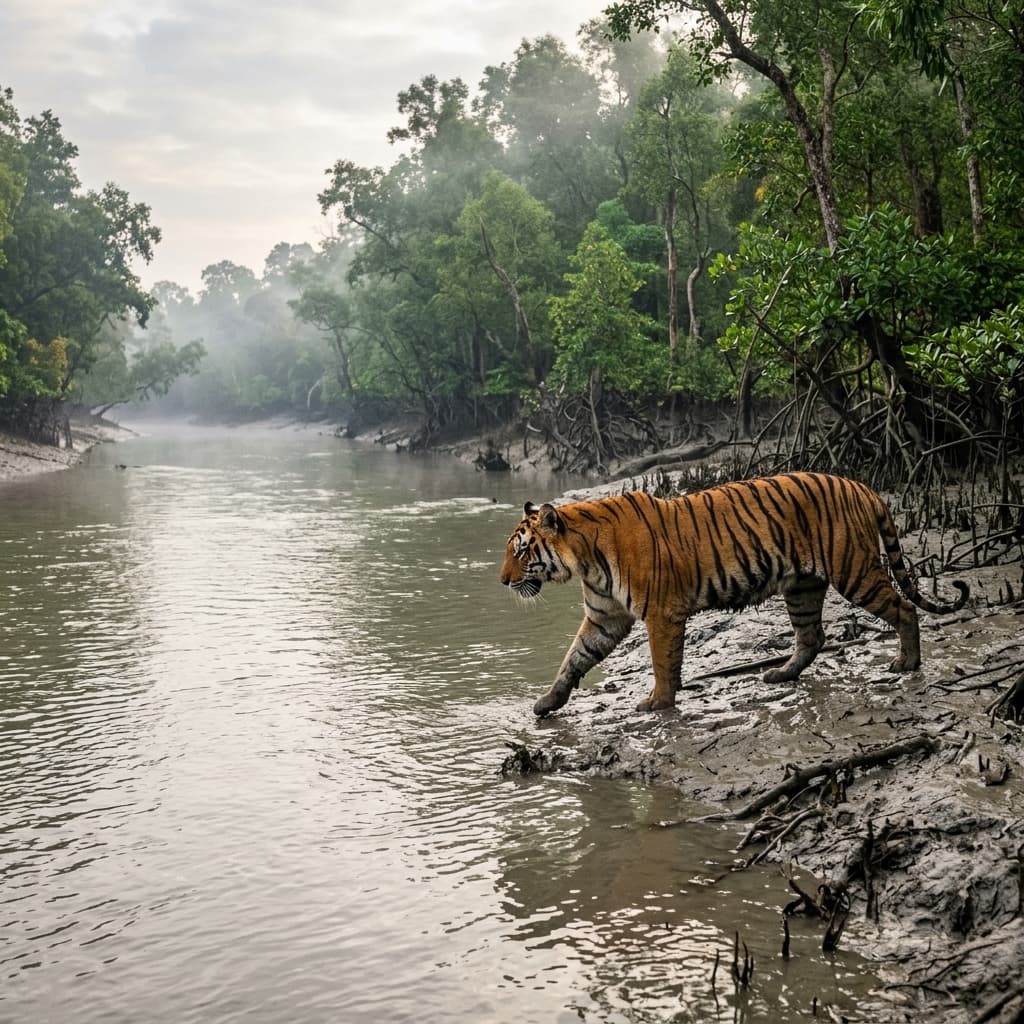
The Royal Bengal Tiger of Sundarbans
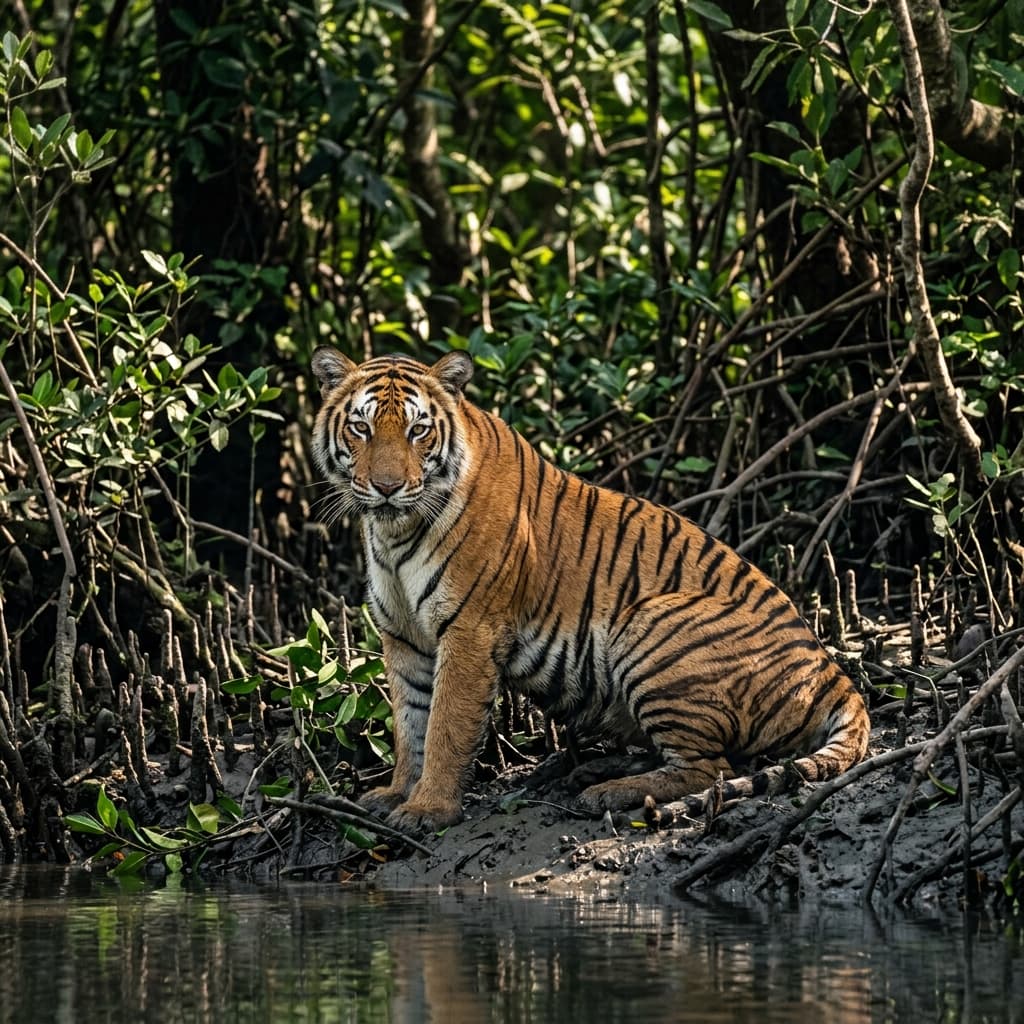
Home to over 100 Royal Bengal Tigers, the Sundarbans is one of the last strongholds of this magnificent predator.
The Sundarbans is the only mangrove forest in the world where the Royal Bengal Tiger has adapted to a semi-aquatic lifestyle. These magnificent creatures swim between islands, hunt fish and crabs, and have developed unique behavioral patterns found nowhere else on Earth. The Sundarban Tiger Reserve, a UNESCO World Heritage Site, protects approximately 100+ tigers in its core area. Unlike their counterparts in mainland forests, Sundarban tigers are exceptional swimmers and have been known to cover distances of up to 8 kilometers across tidal waterways. The best chances of spotting a tiger are from the watchtowers at Sudhanyakhali, Sajnekhali, and Netidhopani, especially during the winter months of November to February when tigers come to the creek banks to bask in the sun.

The Living Mangrove Forests
The world's largest mangrove ecosystem spanning 10,000 sq km across India and Bangladesh.
The Sundarbans mangrove forest is one of the largest tidal halophytic mangrove forests in the world, spanning approximately 10,000 square kilometers across India and Bangladesh. Designated as a UNESCO World Heritage Site in 1987, this remarkable ecosystem is home to 64 plant species, including the iconic Sundari trees that give the forest its name. The mangroves serve as a critical buffer against cyclones and tsunamis, protecting millions of people living along the coast. The intricate root systems of the mangroves create a unique underwater habitat that supports an incredible diversity of marine life, including the endangered Ganges River Dolphin, Irrawaddy Dolphins, and various species of sharks and rays. Walking through the mangrove forests on elevated boardwalks like the Dobanki Canopy Walk offers visitors a unique perspective of this living, breathing ecosystem.

Watchtowers & Nature Trails
Explore the famous watchtowers of Sajnekhali, Sudhanyakhali, Dobanki, and Netidhopani.
The Sundarban Tiger Reserve features several strategically located watchtowers that offer visitors the best vantage points for wildlife observation. Sajnekhali Watchtower, the most accessible, is often the first stop on any Sundarban tour. It houses a small museum, a crocodile breeding center, and offers panoramic views of the surrounding mangroves. Sudhanyakhali Watchtower is considered the prime tiger-spotting location, with a freshwater pond that attracts tigers, deer, and wild boar, especially during the dry season. The Dobanki Watchtower is unique for its 500-meter canopy walk – an elevated boardwalk through the treetops that provides an aerial view of the mangrove forest. Netidhopani features the ruins of a 400-year-old Shiva temple and is steeped in local legend about the forest goddess Bon Bibi. Each watchtower provides a different perspective of the Sundarbans ecosystem.

Birds of the Sundarbans
A birdwatcher's paradise with over 260 species including Kingfishers, Sea Eagles, and rare migratory visitors.
The Sundarbans is one of the premier birdwatching destinations in India, hosting over 260 species of birds across its diverse wetland habitats. The Sajnekhali Bird Sanctuary, nestled within the tiger reserve, is the crown jewel for ornithologists. Here, you can spot the magnificent White-bellied Sea Eagle soaring above the canopy, the brilliant Common Kingfisher diving for fish in the creeks, and large flocks of egrets and herons wading through the shallow mudflats. During the winter migration season (November to February), the Sundarbans welcomes thousands of migratory birds from Siberia, Central Asia, and Southeast Asia – including species like the Northern Pintail, Eurasian Wigeon, and the rare Spoon-billed Sandpiper. The Sundarbans is also home to several species of owls, woodpeckers, and the striking Black-capped Kingfisher. The early morning boat cruises through narrow creeks offer the best birdwatching opportunities, when the forest comes alive with the calls and songs of its feathered residents. Our expert naturalist guides carry spotting scopes and field guides to help you identify every species you encounter.

River Life & Local Communities
Discover the resilient communities that call the Sundarban delta home – fishermen, honey collectors, and crab farmers.
The Sundarbans is not just a wilderness – it is home to over 4.5 million people who have adapted to life in one of the most challenging environments on Earth. The local communities, known as Moulis (honey collectors), Jele (fishermen), and Bawaleys (wood cutters), have developed extraordinary survival skills honed over centuries. The honey collectors venture deep into tiger territory during the spring months to harvest wild honey from giant rock bee hives – a tradition celebrated in the legend of Bon Bibi, the forest goddess who is believed to protect them from tigers. Mud crab farming has emerged as a sustainable livelihood, with families nurturing crabs in small ponds carved into the riverbanks. The fishermen of the delta navigate the treacherous tidal channels in small wooden boats, casting nets for Hilsa, Vetki, and Prawns that form the backbone of Bengal's culinary tradition. Village visits during our tours offer an authentic glimpse into this remarkable way of life – you can watch traditional net-making, learn about sustainable fishing practices, and taste freshly prepared local cuisine. Our tourism model ensures that a significant portion of tour revenue goes directly to these communities, supporting schools, healthcare, and conservation efforts.